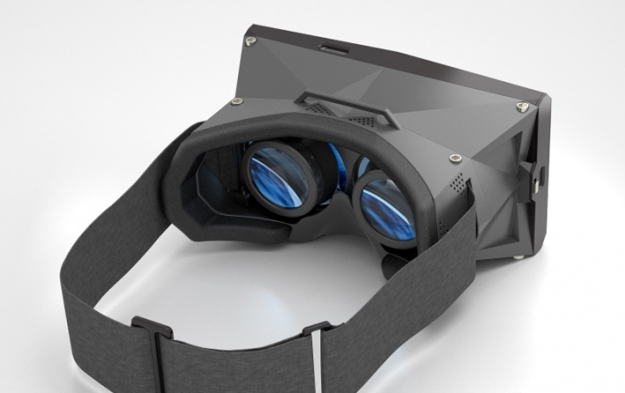
So we've all heard of Oculus Rift. The startup company by Luckey Palmer which refreshed the desire to create high quality, working virtual reality equipment; essentially for gaming.
It was recently purchased by social media goliath Facebook, for approximately 2 billion USD.
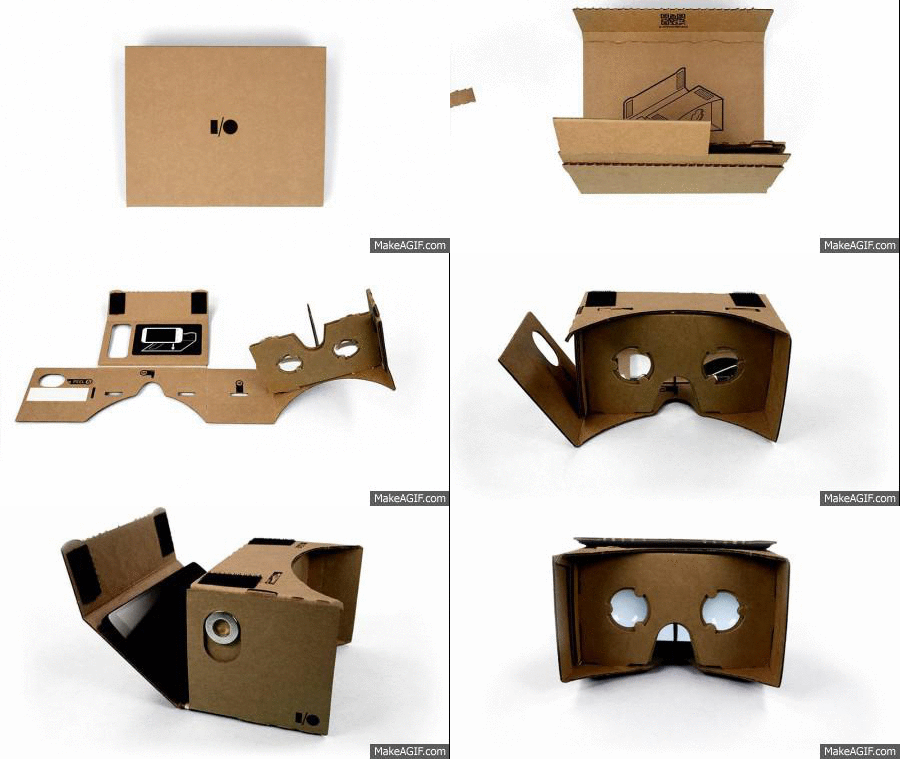
Now, a dev unit costs around 300$+, while over at Google, their engineers fabbed up an interesting VR unit which goes for as little as 30$.
What I like most about this product happens to be that it encourages users to be innovative. Writing code to create new applications that can utilize this device. Even though it is primarily dependent on an Android smartphone, and not necessarily created for high end gaming, there are an overwhelming amount of possibilities to be had.
Anything is possible in this realm, essentially paving the way to a technologically advance future which consists of virtual realistic environments and a new way of interacting with computers. All this is possible, not just thanks to the massive tech corps, but to the curious consumer who desires to do a little more with their devices.
Facebook isn’t just buying into mobile messaging — it’s also going for gaming. In a Tuesday afternoon shocker, Facebook announced it is buying hot virtual reality gaming company Oculus VR for $2 billion. That includes $400 million in cash and 23.1 million shares of Facebook stock. There’s also an additional $300 million potential earn-out in cash and stock based on “the achievement of certain milestones.” Fresh off Facebook’s $19 billion purchase of WhatsApp, CEO Mark Zuckerberg is showing the world that he isn’t afraid to use his company’s skyrocketing share price to get an edge in Silicon Valley. Facebook stock is up over 150% in the last year and both the WhatsApp and Oculus deals took advantage of that with large stock-cash splits. “Mobile is the platform of today, and now we’re also getting ready for the platforms of tomorrow,” Zuckerberg said in a statement. “Oculus has the chance to create the most social platform ever, and change the way we work, play and communicate.”
In addition to its own Glass project, Google has released Android Wear. Sporting an interesting new operating system capable of message notifications and voice commands. Google also promises that your favourite fitness applications will work seamlessly on the device.
(Lenovo owned) Motorola, is the first company to embrace the idea and create their own iteration of the device and implement their own operating system. They coined it "Moto 360".
I'm curious as to how both Android Wear, Google Glass and your cellular device will work in unison. Multiples of the same data displayed on all three at a time? Ah well, I guess only time will tell.
Zing!
Stay tuned for pricing and more in depth information as it becomes readily available.
In an apparent strategic move made by Google; a partnership has emerged with Luxottica (parent company of Ray-Ban, Oakley, Persol etc..) to aid in a creative design of Google Glass. The deal was approximately made Luxottica's Italian founder - Del Vecchio, 700 million dollars richer.
With over 5000 retail stores in the U.S alone and a rather massively diverse portfolio within other regions of the globe, the initial idea could potentially be a big hit.
Perhaps this could be the key to ridding the high-tech eye wearer's labelling as "glassholes" ...
After a flood of rumours, Samsung has unveiled the Galaxy Round: the world’s first smartphone to eschew a flat display in favour of a horizontal concave curve.
Running Android 4.3 with its own proprietary Touch Wiz interface, the Galaxy Round comes powered by a 2.3GHz MSM 8974 quad-core processor – with 32GB of internal storage and 3MB of RAM – and sports a 5.7″ 1080p HD display and weighs in at just 5.4 ounces with a slim 0.3″ thick profile. Like the S4 and Note 3, the Galaxy round features a 13MP camera with autofocus and flash in addition to a 2MP forward-facing camera. Highlighted by the design are brand new “roll” and “gravity” effects that expand gesturing by allowing users to access glance and music-centric screens with a rock of the device. Samsung’s Galaxy Round is set to first launch in Korea before making its way to additional markets.
Galaxy Gear
Samsung‘s latest commercial for the Galaxy Gear, which recently aired during week 5 of the NFL season, takes viewers on a nostalgic journey through the most iconic wrist-worn devices featured on the big-screen and television. With devices from The Jetsons, Mighty Morphin Power Rangers, Knight Rider, Predator and Star Trek to name but a few making an appearance, the promo concludes with a 360-degree look at Samsung’s latest innovation and a tagline that reads ”it’s finally real.” Check out the commercial below featuring scenes from films and TV series that inspired the Galaxy Gear “evolution.”
Introducing the Kickstarter-borne Bluetooth-enabled smartwatch that pairs with your smartphone to display notifications, manage apps and even control song playback.
The Pebble is priced at $150, which may sound like a lot, but many popular timepieces coast as much or more - and all they do is tell time. The pebble, on the other hand pairs with any Android and iOS devices running version 2.3 Gingerbread or iOS 5 and above to provide at-a-glance access to many of its functions. Windows Phone, BlackBerry and Palm users are outta luck.
Without a paired device, the Pebble continues to function as a watch, but when connected to your iPhone or Android smartphone it's capable of displaying text messages and emails, displaying ID's for incoming calls, reading emails, and changing song tracks. The Pebble pairs with your device over Bluetooth and displays the notification that is simultaneously appearing on your phone.
MEMORY Card slot - microSD, up to 64 GB Internal - 16/32/64 GB storage, 2 GB RAM
DATA GPRS - Yes EDGE - Yes Speed - HSDPA, 42.2 Mbps; HSUPA, 5.76 Mbps; LTE, Cat3, 50 Mbps UL, 100 Mbps DL WLAN - Wi-Fi 802.11 a/b/g/n/ac, dual-band, DLNA, Wi-Fi Direct, Wi-Fi hotspot Bluetooth - Yes, v4.0 with A2DP, EDR, LE NFC - Yes Infrared port - Yes USB - Yes, microUSB v2.0 (MHL 2), USB On-the-go, USB Host
CAMERA Primary - 13 MP, 4128 x 3096 pixels, autofocus, LED flash Features - Dual Shot, Simultaneous HD video and image recording, geo-tagging, touch focus, face and smile detection, image stabilization, HDR Video - Yes, 1080p@30fps, dual-video rec. Secondary - Yes, 2 MP,1080p@30fps, dual video call
FEATURES OS - Android OS, v4.2.2 (Jelly Bean) Chipset - Exynos 5 Octa 5410 CPU - Quad-core 1.6 GHz Cortex-A15 & quad-core 1.2 GHz Cortex-A7 GPU - PowerVR SGX 544MP3 Sensors - Accelerometer, gyro, proximity, compass, barometer, temperature, humidity, gesture Messaging - SMS(threaded view), MMS, Email, Push Mail, IM, RSS Browser - HTML5, Adobe Flash Radio - TBD GPS - Yes, with A-GPS support and GLONASS Java- Yes, via Java MIDP emulator Colours - White Frost, Black Mist
ADDITIONAL FEATURES
- Wireless charging (market dependent)
- S-Voice natural language commands and dictation
- Smart stay, Smart pause, Smart scroll
- Air gestures
- Dropbox (50 GB storage)
- Active noise cancellation with dedicated mic
- TV-out (via MHL 2 A/V link)
- SNS integration
- MP4/DivX/XviD/WMV/H.264/H.263 player
- MP3/WAV/eAAC+/AC3/FLAC player
- Organizer
- Image/video editor
- Document viewer (Word, Excel, PowerPoint, PDF)
- Google Search, Maps, Gmail,
YouTube, Calendar, Google Talk, Picasa
- Voice memo/dial/commands
- Predictive text input (Swype)
BATTERY
- Li-Ion 2600 mAh battery
Also available with Qualcomm Snapdragon 600 chipset (Quad-core 1.9 GHz Krait 300 CPU, Adreno 320 GPU).
Just days away from Samsung's Unpacked Event in New York City, the handset giant finally released a teaser photo of what could be its fourth-gen product, the Samsung Galaxy S IV. The handset itself does not deviate much from the design of Samsung's previous generation products - not necessarily a bad thing, but the photo dusts up more rumours that it lays to rest.
The dim, dark photo vaguely shows the outline of the S IV, with Samsung's signature curved edges and touch screen that could perhaps disappoint consumers looking for a radically different design for the much-loved Galaxy series. Also, the phone's design looks very similar to the model that an alleged leaker has produced media about for the past few days.
It's easy to see the similarities in the similarities in the video above, which happens to have many of the standard haptic responses and noises that come with a Samsung phone.
That's not to say that this phone actually is the Galaxy S IV: it also bears a striking resemblance to Samsung Duo's Line, a popular phone series in China and other parts of Asia.
Only 2 more days until the rumours are put to rest. Check back here for the latest news once they are available.
A horrible commercial to mate an epic product. Nice one Samsung!
Any who, we are less than a week away from the big reveal of Samsung's next flagship smartphone, the Galaxy S IV. According to a source speaking with the New York Times, the Galaxy S IV will include "Eye Scrolling," a new way to possibly interact with a smartphone.
Earlier this year, Samsung filed for trademark over the name "Eye Scroll" in Europe, and "Samsung Eye Scroll" in the United States. There's no word as to whether or not the eye-tracking tech will be on display during Samsung's "Unpacked" reveal event on March 14.
There is a new domain out that suggests Microsoft could be preparing for an event to announce it's next console. According to WhoIS data, XboxEvent.com was registered yesterday by U.S. Techs (a company who recently recently rebranded as Event Core) that provides "advanced customized soloutions i nthe event management industry".
Xbox 720 rendering
The same U.S. Techs also registered XboxE3212.com (the event site used to sign up for Microsoft's press briefing at E3 last year) as well as Microsoft's Hosting Summit of 2013, which includes text "this site is hosted for Microsoft by U.S. Techs" at the bottom.
Not too sure if this event is in light of Sony's dedicated PlayStation 4 event a few days ago, but it could be an entertaining event regardless.
According to reports from CVG and The Verge, industry resources suggest that April is currently the most likely time frame.
Quick snaps of the next generation of the Dual Shock 4. So far, it looks appealing, especially with that "v" band of blueish light on the rear. Very futuristic, however it's the ergonomics of the controller that have me a bit concerned. Will need to hold/use one to conclude analysis lol.
As you can see, they have replaced the conventional "select" and "start" buttons with "Share" - to live stream games/media and or share content over social media - and "Options"
The L2 and R2 triggers have been re-designed to deploy similar to the Xbox 360 handset, however more of narrowish look.
L1 and R1 buttons have increased in size, as well as a blue sensor that works in sync with the Move controller.
USB charger/connector on the rear and it seems that the new R3/L3 analog sticks protrude from the controller a lot more this time around.
Touch pad sensor in the middle, headset jack, and a new D-pad design.
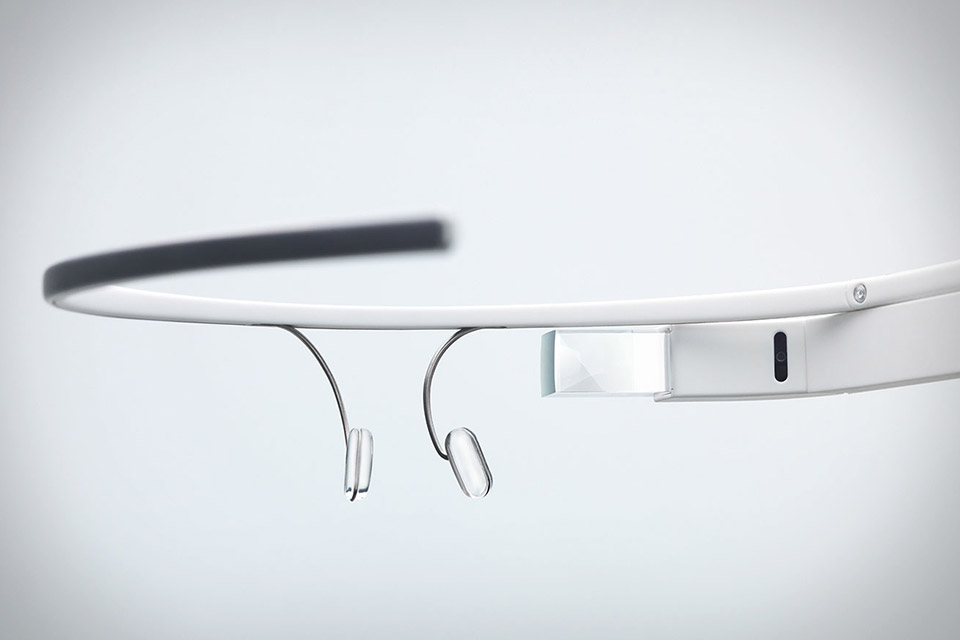
Google has officially moved out of the "project" phase and into a whole new testing cycle with a recently announced contest for Google Glass. To kick off the contest, they launched a new Website that details simplistic questions for the augmented reality glasses like "how it feels", "what it does" and "how to get one".
Google is accepting applications until February 27th with those passionate about the projectm answering questions and paying a hefty $1,5000 USD fee to be the first to test out the built-in-voice recognition, on-board, hands-free video recording, and photo capture.
Up until now, Google employees were the only ones wearing Google Glass, developed by Sergey Brin.
Here is the official place to get your hands on one Google Glass
Technology really is making a breakthrough. I would like to see how these are down the line in terms of production and "styles" for frames.